Beginner's Guide to Model Railroading
Preventing Derailments
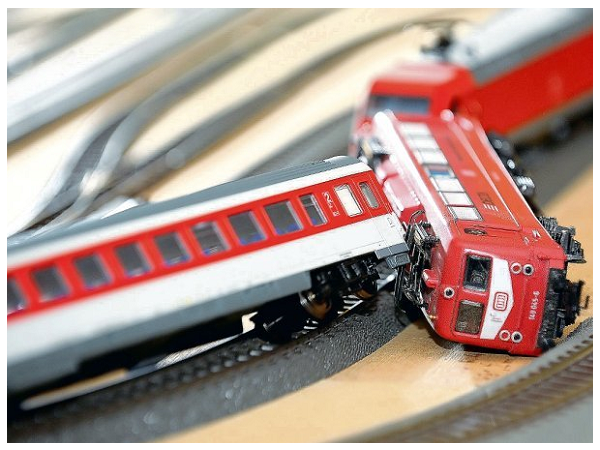
There are many reasons for model train derailments. Among the most common are:
- Light-weight rolling stock;
- Dirt, debris or other particles on the tracks;
- Dirt, debris or other particles on the wheels of locomotives and rolling stock;
- Separations or spaces between track connections;
- Improperly installed rail joiners;
- Improperly aligned or malfunctioning couplers.
Rolling stock like gondola, coal, or box cars may be too light to "hold" the rails. The solution to light-weight cars is to simply add more weight. Prepackaged bags of coal may be purchased in hobby shops or online. Simply fill gondola or coal cars with the coal. Other cars can be weighted down with thin metal strips, also sold in hobby shops, that are glued to the bottom frames of the cars.
Dirt, Debris or Other Particles on Tracks and Wheels of Locomotives and Rolling Stock
The next section of this Railroading Workshop titled Track Cleaning provides detailed cleaning guidelines.
Separations or Spaces between Track Connections
Carefully examine tracks for spaces between them. Train wheels that skip over rail gaps can cause derailments. The ends of the rail sections should be snugly connected together to ensure proper electrical contact.
Improperly Installed Rail Joiners
This is a common cause of derailments. Ensure that all rail joiners are properly installed and that the ends of track sections do not ride over the joiners. The slight rise at the end of a track section will lift and "throw" train wheels off the track. Also, ensure that all joiners are tightly fitted around the ends of rail sections. Loose joiners result in spaces or gaps and improper track connections.
Improperly Aligned or Malfunctioning Couplers
Check all your rolling stock for improperly aligned or malfunctioning couplers by pushing them together along the tracks and watching for proper coupler locking and alignment. Couplers that are not aligned will not lock. After the cars have been pushed together, gently attempt to pull them apart. The couplers should hold the cars together. Faulty couplers will not lock the cars together. Replace the couplers.
Rerailer Tracks
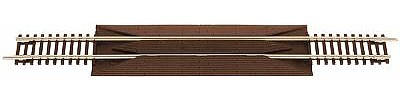
Want to ensure that your locomotives and rolling stock remain on the tracks? What to prevent derailments? Insert rerailer tracks (illustrated below) at strategic locations along your model railroading track layout. Curved rerailer tracks are also available. Include at least one rerailer on each separate line of track. If a rolling stock derails, as soon as it moves across a rerailer, it will be back on track and running smoothly.
Continue with this Railroading Workshop by clicking on the link below:
How to Clean Railroad Tracks